Sunday, December 8, 2019

Polio returns to Malaysia after 27 years


Malaysia has reported its first polio case in 27 years in a three-month-old baby diagnosed on Borneo island on December 6.
The Malaysian health ministry's director-general, Noor Hisham Abdullah, said the baby from Tuaran in eastern Sabah state had been admitted into intensive care after experiencing fever and muscle weakness.
The patient was said to be undergoing treatment in an isolation ward and in a stable condition but needs respiratory support.
The diagnosis comes after the Philippines, which shares a close sea border with Sabah, was hit in September by its first polio case in nearly two decades.
Test results showed that the Malaysian child was infected with a strain that shared genetic links to the virus detected in the Philippines.
Malaysia was declared polio free in 2000.
The last case in the country occurred in 1992.
Polio immunisation is not mandatory in Malaysia and a small group of people refuse vaccination due to misinformation.
In recent years, Malaysia had recorded a number of deaths among children from diphtheria, another vaccine-preventable disease, because they did not receive immunisation.
Investigations found that 23 children under the age of 15 who lived close to the infected baby had also not received the polio vaccine.
Vaccination activities and monitoring are being carried out to try and contain the spread of the disease.
Polio is a highly infectious viral disease which has no cure and can only be prevented with several doses of oral and injectable vaccines. It affects the nervous system and spinal cord and can be fatal in rare cases.
Over the past three decades the world has made great strides in the battle against polio. The World Health Organization said only 33 cases were reported worldwide in 2018.
Pakistan and Afghanistan are the only countries in the world where polio has never been eradicated.
Nigeria recorded the last case of polio on August 2014 and is awaiting WHO certification of being polio - free in 2020.

Monday, October 7, 2019

Biologists decode oxygen sensors in cells to win Nobel Prize in Medicine


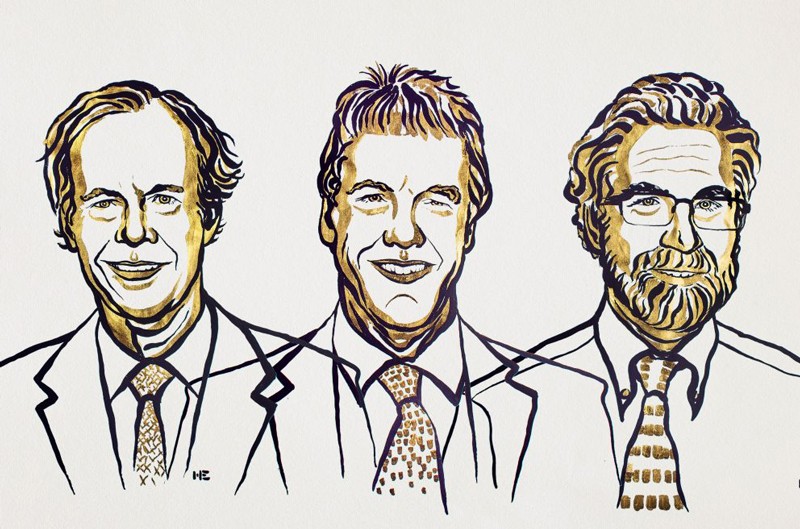
William G. Kaelin Jr, Sir Peter J. Ratcliffe and Gregg L. Semenza illustration
William Kaelin, Peter Ratcliffe and Gregg Semenza have together worked out how genes respond when oxygen is depleted.Credit: Ill. Niklas Elmedhed/Nobel Media
Three scientists - cancer researcher William Kaelin at the Dana-Farber Cancer Institute in Boston, Massachusetts; physician-scientist Peter Ratcliffe at the University of Oxford, UK, and the Francis Crick Institute in London; and geneticist Gregg Semenza at Johns Hopkins University in Baltimore, Maryland have won the 2019 Nobel Prize in Physiology or Medicine for describing how cells sense and respond to oxygen by switching genes on and off. 
 This discovery has been key in understanding human diseases such as cancer and anaemia. Among the applications of their discovery is a better understanding of how the body reacts when oxygen levels drop owing to exercise or stroke, and efforts to manipulate the response to slow the growth of oxygen-hungry cancer tumours.
Their work has helped researchers to understand how the body adapts to low oxygen levels by, for example, cranking out red blood cells and growing new blood vessels.
“This is a fundamental discovery that they’ve contributed to” says Celeste Simon, a cancer biologist at the University of Pennsylvania in Philadelphia. “All organisms need oxygen, so it’s really important.
“The field really coalesced around this discovery, which was dependent on each one of their findings,” says Randall Johnson, a physiologist at the University of Cambridge, UK, and the Karolinska Institute in Stockholm, and a member of the Nobel Assembly. “This really was a three-legged stool.”
In work conducted in the 1990s, the scientists discovered the molecular processes that cells go through to respond to oxygen levels in the body. They found that central to this is a mechanism involving proteins called HIF and VHL.
Meanwhile, Kaelin showed that a gene called VHL also seemed to be involved in how cells respond to oxygen, through studying a genetic syndrome called von Hippel-Lindau’s disease; families with the disease carry mutations in VHL and the condition raises the risk of certain cancers. Semenza and Ratcliffe studied the regulation of a hormone called erythropoietin (EPO), which is crucial for stimulating the production of red blood cells in response to low levels of oxygen. Semenza and his team identified a pair of genes that encode the two proteins that form a protein complex called hypoxia-inducible factor (HIF), which work together to turn on certain genes and boost erythropoietin production when oxygen is low.
Ratcliffe and his team later found that the protein expressed by the VHL gene interacts with one of the components of HIF, turning off responses to low-oxygen conditions by marking the HIF component for destruction once oxygen levels rise.
And in 2001, teams led by Kaelin and Ratcliffe both showed that, as part of this process, a chemical modification to the VHL protein, called prolyl hydroxylation, allows cells to respond to oxygen levels incredibly rapidly. When oxygen is present, the modified form of VHL can bind to HIF, which leads to its breakdown. But this modification is blocked when cells are oxygen-starved, kick-starting the activity of HIF.
As a result, cells can react to low oxygen levels by simply blocking the breakdown of HIF, notes Mark Dewhirst, a cancer biologist at Duke University in Durham, North Carolina. “The cell can respond in minutes.”
The work has led researchers to develop drugs that target oxygen-sensing processes, including for cancer. Drugs that prevent VHL from binding to HIF and causing its degradation, called prolyl hydroxylase inhibitors, are also being investigated as treatments for anaemia and renal failure. Chinese regulators approved the first of these drugs in 2018.


Tuesday, September 3, 2019

Woman's cornea repaired with ‘reprogrammed’ stem cells

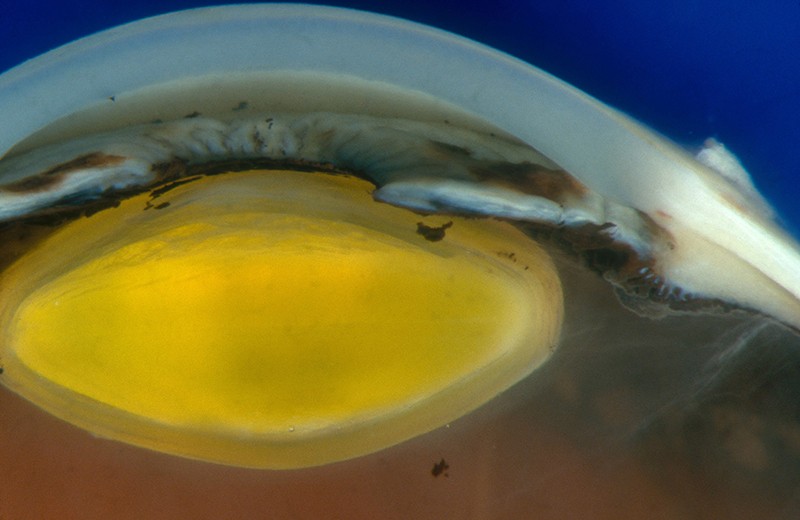
Anterior segment of human eye showing cornea, iris, and lens.
A 40-year-old Japanese woman is the first person in the world to have her cornea repaired using reprogrammed stem cells, according to Nature.
Ophthalmologist Kohji Nishida from Osaka University, Japan, said the woman has a disease in which the stem cells that repair the cornea, a transparent layer that covers and protects the eye, are lost. The condition makes vision blurry and can lead to blindness.
To treat the woman, Nishida says his team created sheets of corneal cells from induced Pluripotent Stem (iPS) cells. 
These are made by reprogramming adult skin cells from a donor into an embryonic-like state from which they can transform into other cell types, such as corneal cells.
Nishida said that the woman’s cornea remained clear and her vision had improved since the transplant a month ago.
Currently, people with damaged or diseased corneas are generally treated using tissue from donors who have died, but there is a long waiting list for such tissue in Japan.
Japan has been ahead of the curve in approving the clinical use of iPS cells, which were discovered by stem-cell biologist Shinya Yamanaka at Kyoto University, who won a Nobel prize for the work. Japanese physicians have also used iPS cells to treat spinal cord injury and Parkinson's disease among others.

Saturday, August 31, 2019

Lagos plans 1m birth registrations in 2019

https://mail.google.com/mail/u/1/images/cleardot.gif

Image result for children, birth LagosThe Lagos State government has stepped up efforts to register children from birth even as it has been mandated by the National Population Commission (NPopC) to register 1 million children by the end of the year.
With a total of 231,584 registrations comprising 117,586 boys and 113,998  girls, Lagos had the 2nd highest number of birth registrations in the country in 2018 after Borno State.
The Lagos State 2019 report shows that the worst-performing Local Government Areas (LGAs) are Epe with 28,817 registrations, Lagos Island 28,579 registrations, and Ibeju- Lekki with 18,346 registrations.
In 2018, the worst-performing LGAs were Ajeromi/Ifelodun with 34 percent, Lagos mainland with 36 percent and Mushin with 41 percent birth registration.
In the views of UNICEF Child Protection Specialist, Mrs. Sharon Oladiji, “Birth registration is the first step towards recognizing a child’s inalienable right as a human being, but in Lagos state, this is failing to meet their right to an identity, name and nationality.”
Oladiji who spoke during a two-day media workshop organized by the National Orientation Agency (NOA) in collaboration with UNICEF, on the need to scale up birth registration in Lagos State decried the threat to the rights of over 1.4 million children in the state, even as she called for expansion of birth registration services in all LGAs with prioritization of interventions to accelerate progress, especially amongst the poor in rural areas and among socially disadvantaged groups.
“ When a child is not registered, there is no official record of his/her full names and that child will not have access to basic services,” said the Head of Department, Vital Registration Department, National Population Commission, NPoPC Lagos State, Mr. Nwannukwu Ikechukwu.
He said to scale up the number of registered births in Lagos, the Commission plans to create an additional 26 centres across the state.
Nwannukwu blamed the low birth registration rate in the State to myriads of challenges including lack of suitable offices for comptrollers and registrars; touting of birth and death certificate; the unhealthy rivalry between Lagos state council staff and NPoPC registrars among others.
Image result for children, birth certificate LagosThe HOD, however, emphasized the importance of improved service delivery, identification of barriers and bottlenecks, forging community-based approaches and encouraging innovation as the solution to the identified problems of weak birth registration system.
He urged the State government to employ more ad hoc registrars, to enable the commission to cover more areas, especially in hard to reach communities within the state.
On his part, Lagos State Director, National Orientation Agency, NOA, Mr. Waheed Ishola, who noted that the media was critical in the scaling up of birth registration, appealed to media practitioners to buy into the programme and help create awareness on the project.
Provisions in the current legislation for birth registration make it mandatory. The Federal Government’s decree No. 69 of 1992 on vital registration states that registration shall be carried out free of charge, within a period of 60 days from the date of birth.
Birth registration is the continuous, permanent, compulsory and universal recording of the occurrence and characteristics of birth. The exercise is free nationwide for children aged 0-17 years.
Information from RapidSMS, a data tracking tool that collects and collates real-time information using Short Messaging System (SMS),  in 2018, 175,912 children under one year were registered comprising 86,497 girls and 89,415 boys while 308,529 Under fives comprising 155,031 girls and 253,497 boys were registered.
For 2017, the State registered 211,312 children under age one, 103,801 girls and 307,509 boys, under five 338,195, while for girls 165,611 and 072, 585 for boys.
In 2016, a total of 197,814 children were registered (101,157 boys and 96,657 girls). Under fives registered were 321,228 (157,081 girls and 64,148 boys), while
In 2015, Lagos State registered 176,533 children under the age of one, comprising 87,693 girls and 88,840 boys while for the Under fives, 236, 592 children were registered made up of 117,041 girls and 119,551 boys.


Medical abortion and matters arising

AS soon as she discovered she was pregnant, Comfort, a young Nigerian woman immediately made up her mind she was not keeping it. As events later showed, the unnamed housewife had given birth thrice in the past but for reasons best known to her, she put her foot down and insisted the fourth pregnancy had to go.
“I was a full-time housewife and my husband had just lost his job,” she narrated. “We were literarily struggling to put food on the table and pay all the bills. Survival was difficult. I wasn’t on any family planning method and we already had three children spaced less than two years apart and the eldest was barely 6, so another pregnancy was simply out of the question.”
“I did not even tell my husband I was pregnant. I knew if I did, he would try to convince me to keep it. For me though, the decision was made as soon as I heard that I was pregnant and I just went all out and terminated it on my own.”
But Comfort did not immediately makeup her mind how the unwanted pregnancy as to be terminated. Over the next few weeks, she pondered over the issue and finally settled for an unsafe abortion through the use of certain "pills" and "tablets" to initiate a crude medical abortion of the growing fetus.
“I bought the pills and some other recommended medicines that I was told were efficient in inducing abortion. I took them at home early one morning and started bleeding soon afterward.
“The bleeding became so much and I felt a bit of pain, but by the evening of the next day, everything had subsided. My husband did not even suspect anything but I later told him everything a few months afterward.
“He was very surprised and rather angry with me but appealed that I should never to try such a thing again. I promised and I am now on a reliable contraceptive.”
The home is important in the reproductive health story of women in Nigeria. Women get pregnant at home, give birth at home and often induce abortion at home.
Medical abortion actually brings access to safe abortion closer home. All over the country, all classes, women with unwanted pregnancies seek access to safe termination processes across the city women can easily purchase a wide range of drugs without a prescription to bring on their wayward periods.
Like Comfort, millions of Nigerian women experience unwanted pregnancies and resort to unsafe termination with the associated health. Experts say one of the reasons Nigerian women often turn to abortion is to avoid unwanted births.
“The provision of family planning counseling and information could substantially reduce the incidence of unwanted pregnancy and induced abortion in Nigeria,” said Prof Adetokunbo Fabamwo, a Consultant Gynaecologist and the Chief Medical Director, Lagos State University Teaching Hospital, Ikeja, Lagos.
Among  other factors are the fear of isolation and rejection, employment policies, ignorance, completed family, too young or too old.
 In the views of Ms. Sybil Nmezi of the Generation Initiative for Women and Youth Network (GIWYN) millions of women and girls finding themselves with an unintended pregnancy becomes a moment of decision.
Nmezi, who spoke about how barriers to reproductive health care and services affect women’s lives, said the law on abortion in Nigeria was too restrictive and should be reviewed.
  “For some, it is simple and straight forward, for others, it is difficult and complex,” she asserted.
In a study conducted by the Guttmacher Institute, almost a third of the women said they had undergone at least one unwanted pregnancy. About half of them admitted having attempted to end their last unwanted pregnancy.
Speakers at the forum agreed that at least every other woman who seeks an abortion does so because they are not married, are too young or are still in school. Of the women not practicing contraception when they had the unwanted pregnancy, a number are unaware of family planning, and about 1 in 5 either have no access to contraceptive services, or the services are too expensive or they’re afraid of side effects.

x

Africa adopts strategic plan to reduce malnutrition

Image result for moeti
A strategic plan to reduce the double burden of malnutrition in the African Region was recently adopted at the 69th Regional Committee meeting of the World Health Organization (WHO) for the African Region.
 The Regional Committee is the governing mechanism involving health ministers from all 47 Member States of the WHO African Region.
WHO Regional Director for Africa, Dr Matshidiso Moeti, said the plan outlines the urgent and accelerated action to take to meet the goal of ending hunger and all forms of malnutrition by 2030.
“The WHO Secretariat will be developing and implementing a resource mobilization plan, supporting research collaborations and mounting high-level advocacy for increased investment to reach 90% coverage of the 10 highest-impact nutrition interventions that must be taken to meet the malnutrition challenges in our region,” Moeti said.
The double burden of malnutrition is particularly prevalent in countries undergoing “nutrition transformation” in which undernutrition and overweight or obesity coexist, often because of the increasing consumption of cheap, processed foods that are high in energy, fat and salt content but low in nutrient quality.
This diet, which is common in Africa, fails to address chronic undernutrition and micronutrient deficiencies and contributes to increased obesity and diet-related non-communicable diseases.
The the strategic plan aims to strengthen evidence-based policies and national capacity and contains clear targets to be achieved by 2025. Priority interventions include reinforcing legislation and food safety standards, using fiscal measures to incentivize healthy food choices and integrating essential nutrition actions in health service delivery platforms.
The number of undernourished people in sub-Saharan Africa rose from 181 million in 2010 to almost 222 million in 2016. Among children, although the prevalence of stunting decreased from 38.3% in 2000 to 30.3% in 2017, the numbers affected increased from 50.6 million to 58.7 million due to population growth. The rate of wasting in 2017 was 7.1% or 13.8 million children, of whom 4 million were severely wasted.
 Overweight rates are also increasing. The number of children younger than 5 years who are overweight increased from 6.6 million in 2000 to 9.7 million in 2017. For children aged 5–19 years, obesity rates doubled between 2006 and 2016, while for adults, overweight and obesity increased from 28.4% in 2000 to 41.7% in 2016.


Wednesday, August 21, 2019

UNICEF seeks $70m to provide humanitarian assistance to 900,000 children in Venezuela

Image result for UNICEF, Venezuela, waterUNICEF is appealing for more than US$70 million to provide life-saving humanitarian assistance to 900,000 children across Venezuela through the end of the year. New funding in the coming weeks is essential for UNICEF and its partners to meet the critical humanitarian needs of children and families inside the country.
“Some 3.2 million children in Venezuela need humanitarian aid as conditions across the country continue to deteriorate,” said UNICEF Executive Director Henrietta Fore. 
“We are ramping up our work to help children and families who are struggling against food shortages and limited access to essential services like healthcare, safe water and education.”
At least 4.3 million people across Venezuela do not have access to safe drinking water; vaccine-preventable diseases including measles and diphtheria have re-emerged, while yellow fever and malaria are on the rise. An estimated 1.3 million children and adolescents need protection services, while over 1 million children are out of school.
In line with 2019 Humanitarian Response Plan (HRP) for Venezuela launched by the United Nations and its partners, UNICEF’s priorities for the remainder of the year include: Providing 800,000 people with access to safe drinking water; Continuing to rehabilitate the vaccine cold chain; Vaccinating more than 1,200,000 children under 5 years against measles and ensuring treatment for 7,000 children under 5 years suffering from severe or moderate malnutrition.
Others include distributing education materials to 680,000 children aged 4-18 years; reaching 216,000 children with psychosocial and protection support; and providing over 170,000 pregnant women and newborn babies with health assistance.
These efforts build on UNICEF’s existing programmatic reach which has increased steadily over the past year to meet the growing needs of the most vulnerable children. Since 2018, UNICEF has shipped nearly 200 tons of basic health, nutrition, education, water, and sanitation relief supplies to Venezuela.

Nigeria halves malaria prevalence, strengthens ties with Global Fund

By Admin Nigeria has cut malaria prevalence by half over the past decade, reducing the rate from 42 per cent in 2015 to 21 per ...