Tuesday, March 16, 2021

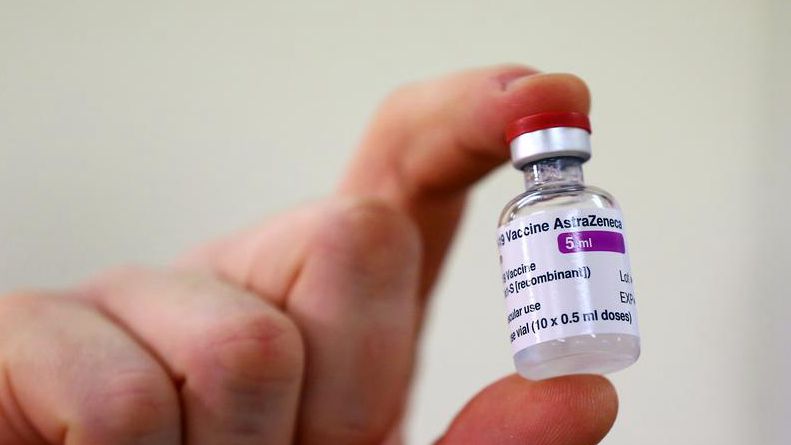
More countries suspend AstraZeneca vaccine as WHO investigates


More countries are fully or partially suspending the use of the AstraZeneca/Oxford COVID-19 vaccine over reports of alleged fatal blood clots among recipients, as the World Health Organization (WHO) is reviewing the available vaccine data. 

France has suspended vaccinations with the vaccine as a precaution for at least 24 hours on the orders of President Emmanuel Macron. 

Spain announced a minimum 15-day suspension effective immediately, while Germany stopped administering the AstraZeneca vaccine on the same day. 

Italy's suspension expanded nationwide as a precautionary measure, after its northern region announced a halt in use following the death of a local teacher on Sunday who was inoculated one day before. 

European countries including the Netherlands, Ireland, Cyprus, Denmark, Austria, Iceland, Bulgaria, Luxembourg, Estonia, Lithuania and Latvia have already suspended the vaccine. 

Thailand was the first Asian country to halt the use of the jab over safety concerns. However, no African country has stopped the rollout of the vaccine. 

Nigeria received 16 million doses of the jab from the COVAX Facility and has distributed to the states where vaccinations have commenced since last week. 

On its investigation into the safety concerns of the jab, the WHO Director General, Dr Tedros Ghebreyesus stated that it was routine. 

"This does not necessarily mean these events are linked to COVID-19 vaccination, but it's routine practice to investigate them, and it shows that the surveillance system works and that effective controls are in place. " 

The WHO's Global Advisory Committee on Vaccine Safety is reviewing the available data and met on Tuesday for further discussion. 

Tedros said the WHO was aware multiple countries had suspended the use of AstraZeneca's COVID-19 vaccine following reports of blood clots in people who had received the vaccine from two batches produced in Europe. 

A spokesperson for AstraZeneca explained that a review of safety data of people vaccinated with the shot has shown no evidence of an increased risk of blood clots. 

 "An analysis of our safety data of more than 10 million records has shown no evidence of an increased risk of pulmonary embolism or deep vein thrombosis in any defined age group, gender, batch or in any particular country with COVID-19 vaccine AstraZeneca. "

"In fact, the observed number of these types of events is significantly lower in those vaccinated than what would be expected among the general population, " AstraZeneca noted. 

The European Medicines Agency stressed that there was no indication the shot was causing blood clots, adding that it believes the vaccine's benefits continue to outweigh its risks, even as the WHO also said, there is no indication to not use it.

Sunday, March 7, 2021

IWD 2021: NRHJN challenges inequalities, violence against women, girls

On this year's International Women's Day, IWD, themed: "Choose To Challenge", the Network of Reproductive Health Journalists of Nigeria (NRHJN) has called for an end to the cultural stereotypes, biases and other forms of inequalities that prevent women and girls from accessing the full potentials of their sexual reproductive health rights in Nigeria. 

In a statement to mark the day, the Network decried the incessant cases of sexual harassment, rape, abduction and other forms of assault on women and school girls especially by bandits and insurgents in the Northern part of Nigeria, and the enslaving of girls for child labour, as well as  trafficking in the Southern part of the country. 

The statement, signed by Yinka Shokunbi and Sekinal Lawal, the President and Secretary of the Network respectively, described all forms of gender-based violence in the country as constant sources of harm and threats that continue to limit the potentials of girls and women in Nigeria.

The Network urges government at all levels and all stakeholders to do more to protect the sexual reproductive health rights of all Nigerians, especially women and girls from predators, while ensuring that all the states in the country pass the VAPP Act, Child's Right Act and give access to justice and equity in all forms of gender-based violations. 

"Already, there is evidence that pregnancies that are too early, too close, too late or too many carry extra hazards not only for the health of the woman but also for the child.

"Therefore, the availability and access to family planning services to all women in safe and secured environment at all times and not limited to access to choice of medical protection, will ensure women can protect themselves against unwanted pregnancies and achieve full potentials of Sexual and Reproductive Health and Rights at all times, " the statement remarked.

Further, the NRHJN charged every pro-active government to embrace the scaling up of family planning services as one of the maternal survival strategies.

" Although, it is incontrovertible that family planning is a life saver for women and children, the current 17 per cent contraceptive prevalence rate (CPR) is poor (2018 NDHS). 

" Consequently, achieving the new goal to increase the modern contraceptive prevalent rate (mCPR) to 27 per cent as part of Nigeria’s family planning 2020 commitment, should be a priority." 

According to the Network, the unmet need for contraception among married women ages 15 to 49 years in the country put at 23.06 per cent in 2018, by the World Bank development indicators, is unacceptable. 

Noting that women with unmet needs are those who are sexually-active but not using any method of contraception and report not wanting any more children or wanting to delay the next child,  the NRHJN is seeking improved health budget and timely releases of the funds as well as spending for purposes meant, to pave the way for regular availability of family planning commodities and needed consumables.

The group also argues for inclusion of access to sexual reproductive health services such as the provision of ramps in all hospital buildings and facilities, as well as the provision of sign language in public places to facilitate inclusion and access to care for all. 

In addition, the NRHJN is seeking  gender equality and equity in every facets of human endeavour, geared towards the realisation of women's rights in various areas including education, health, poverty alleviation, political and economic empowerment, among others.

"Women have a lot to contribute to the Nigerian society; women have the same brain that men have and with these, we believe that the Nigerian women could have the full benefits enjoyed by men in the country.

The group charged women to rise up to the situation and equip themselves appropriately and contribute  their quota to country's development economically,  socially and in all ramifications. 

"Women in positions need to assist others to change their orientation particularly in the way they bring up male children. Women need to bring up male children in a way that they are responsible and see female as co-partners. The society needs to stop the idea of preferring the male child to the female.

"Nigerian women and girls deserve safe spaces to be able to build a virile nation and attain their potential heights as their counterparts all over the world.
 
"As media advocates, it is our belief that an equal world is an enabled world. Hence, all hands must be on deck to challenge all forms of violence against women and children as we celebrate the 2021 International Women's Day."


Saturday, March 6, 2021

Nigeria begins Covid-19 vaccination


Nigeria has officially rolled out the Covid-19 vaccination with four frontline health workers receiving jabs of the AstraZeneca-Oxford vaccine at the National Hospital, Abuja. 

The vaccines were administered after undergoing final assessment by the National Agency for Food and Drug Administration and Control, NAFDAC, with positive results. 


The first set of health care workers to receive the vaccine in Nigeria are Dr. Ngong Cyprian, Nurse Faith E. Eragbai, Dr. Nuru Joseph and Dr. Thairu Yunusa. 


Flagging off the exercise, the Chairman, Presidential Task Force (PTF) on COVID-19 and Secretary General to the Federation, Mr Boss Mustapha, described the event as a watershed. 


"Nobody is safe until everyone is vaccinated. We must believe our government on the safety and efficacy of the vaccines."


“I salute the commitment of all health workers in saving and ensuring the protection of all Nigerians. This is a novel roll-out and the only authorised source is the Federal Government”. 


Mustapha urged Nigerians not to patronise fraudsters who are out to defraud. 


"We must understand that nobody is safe until everyone is vaccinated. We must believe our government on the safety and efficacy of the vaccines brought to Nigeria," he noted. 


The Minister of Health.  Dr Osagie Ehanire, confirmed that NAFDAC had declared the vaccine doses safe for use on Nigerians. 


He said: “The vaccination campaign we kick off today will be in four phases, and will align with the planned arrival of vaccines in batches. Each phase targets a specific segment of our eligible population, to ensure equity in vaccine deployment.”


"The vaccines (COVID-19) are our common assets and the responsibility is on every person to protect them and ensure proper use. 


" I will like to emphasis that we are not out of the woods. Yes, there is light at the end of the tunnel but we are still in the tunnel."


According to the Executive Director of the National Primary Healthcare Development Agency, NPHCDA, Dr Faisal Shuaib: “It’s a momentous occasion today as we administer the first dose to one of our foremost frontline medical doctors in the fight against COVID-19. 


“Defined frontline health workers are prioritized globally, for vaccination against COVID-19, due to their exposure to the risk infection with COVID-19 virus in the course of duty.”


On his own part, the Speaker, House of Reps. Femi Gbajabiamila, said: "We must not play politics with the health of our neighbour. We have to be mindful of the person that has not been vaccinated... you need to protect your neighbours."


“This is a time for everyone to rally round the government. The vaccines being introduced in Nigeria are safe and effective”. 


Uplift core SRHR principles of Nigerian women, BoT tasks new NRHJN leadership

The newly elected leadership of the Network of Reproductive Health Journalists of Nigeria, NRHJN, has been charged to always uphold and uplift the core principles and policies of the Sexual Reproductive Health Rights (SRHR)  of women in Nigeria. 

The Chairman of the Network's Board of Trustees (BoT), and Chairman Dr Ejike Oji Community Development Foundation, Dr. Ejike Oji, who gave the task during the Network's 2020 Annual General Meeting held virtually on January 22, urged the newly elected officers to remain upright and committed. 

Oji, who is also the Chairman, Association of Advanced Family Planning of Nigeria (AAFP), appreciated contributions of the Network to issues relating to Sexual and Reproductive Health and Rights and policies in its 10 years of existence. 

The  new members of the Network's executive were elected during the  2020 Annual General Meeting held virtually on January 22, to run the Network's ongoing campaign on sexual reproductive health rights and policies for the next three years.

Also applauding the new Exco, the Chairman, Transition Monitoring Group (TMG) and Executive Director, Women Advocates Research and Documentation Centre (WARDC), Dr. Abiola Akiyode-Agolabi, who is a member of the BOT, said they should reach out more in promoting equity and access of women to reproductive health services that enhance their dignity.

She urged the leadership of the Network to put commitment on the front line of media advocacy for promoting gender issues "because there is still a lot of work to be done in eliminating gender based violence on all spheres of our lives as a nation".

On her part, the Chairman, Nigeria Bar Association (NBA) Abuja Branch, Dr. Hauwa Shekarau, who is the group's Legal Adviser and BOT member, noted that the Network has shown in 10 years that it is a media advocacy group to be reckoned in the SRHR space.

She charged the new Exco to continue to strengthen the capacity of its members across the country through continued programmes of development and engagements so that more visibility would be given to issues of women, girls and persons rights to making informed decisions and right choices in their sexual and reproductive health.

The NRHJN was formed in April 2010 with the support of Ipas, Nigeria as a media advocacy group to be a communication bridge between SRHR partners and the public at a time when it was difficult for the public to appreciate the works of most partners, the importance of sexual and reproductive health rights of women and girls and protection against gender based violence.

The concerted media advocacy of the Network has been instrumental to the birth of the VAPP Law and its continued adoption in several states of Nigeria.

The Network has also been on the front line in the Global Gag Rule (GGR) campaign, access to Family Planning services/ contraceptives of choice and eduction on elimination of harmful traditional practices that violate reproductive health and rights of women especially gender based violence such as rape, sexual harassment among others.

The Network is a registered media not for profit group with membership that cuts across all genre of the media and in 20 states with State Coordinators.

Among the newly elected leadership are Ynka  Shokunbi, President; Nasir Yusuf Ibrahim, Vice President;  Sekinah Lawal, National Secretary; Tosin  Odusola, Assistant Secretary; Julie Ekong, Treasurer and Nma Okereke,  Financial Secretary. 

Others are Sola Ogundipe, Program Advisor; Elizabeth Kah, Welfare/Publicity Secretary; Martins Ifijeh, Internal Auditor; Ijeoma Ukazu, Ex- officio and Joy Olabisi Akpaida Ex-Officio. 

Tuesday, August 11, 2020

Shekarau, Akiyode-Afolabi speak on Sexual Harassment Bill

Dr. Abiola Akiyode-Afolabi
                                      
Barrister Hauwa Shekarau

    
The first elected female chairperson of Nigeria Bar Association, FCT Chapter, Barrister. Hauwa Shekarau, and the Executive Director,  Women Advocates Research and Documentation Center, WARDC, Dr. Abiola Akiyode-Afolabi, have called for a more comprehensive Sexual Harassment Bill that would enable Nigeria tackle the rampant cases of sexual harassment more realistically.


The two lawyers and civil rights activists who spoke during a Zoom meeting on the Sexual Harassment Bill with the theme "Combating Sexual Harassment to Uphold Ethics in Nigeria's Tertiary Education Institutions”,  decried the undesirable increase of sexual harassment cases in tertiary educational institutions.

Shekarau, who was a guest speaker at the event organized by the Network of Reproductive Health Journalists of Nigeria (NRHJN), lamented the pervasiveness of sexual harassment, urged for the harmonizing existing laws to make it easier for lawyers and the police to ensure their implementation.

“Sexual harassment in the workplace in Nigeria is one of the worst in the world because we do not have extant laws that prohibit sexual harassment across the board. This is the starting point but it would be very nice if it can be made holistic and very comprehensive," Shekarau remarked.

Further, she said: “Nigeria’s criminal justice system is so flawed. It is flawed because of the society we live in. Day in day out, Nigeria is slipping into the abyss, it is sad but the truth. Today in Nigeria, justice is for the highest bidder.” 

Calling for a review of the penalty,  the NBA chairperson opined that it should be stiffer than recommended in order to be commensurate to the offense. 

“If I were the one, I would say not less than 14 years should be the penalty rather than up to 14 years, because when you make provisions like this, it gives judges prerogative to reduce the penalty and when they do that it does not seem fair at all.” 

Also speaking, the Executive Director, WARDC, Dr. Abiola Akiyode-Afolabi, argued that the essence of the sexual health bill was to protect professional ethics within the institutions of higher learning. 

Akiyode-Afolabi who noted that the Sexual Harassment Bill is not targeted at lecturers,  however, pointed out that lecturers who are in a position of responsibility should not compromise. 
According to her, the system itself makes students vulnerable. 

“There is a whole of things affecting sexual harassment in the school system.  Students are exposed to risk and are vulnerable" she noted. 

She stressed that the law is intended to protect the students without eroding the authority of the educational institutions.

Thursday, July 16, 2020

Covid-19 ICU mortality rates falling drastically since start of pandemic – STUDY


The chance of surviving Covid
-19 infection after falling critically ill has risen significantly since the start of the pandemic, a new research suggests.
Analysis by the University of Bristol shows the proportion of patients dying from the infectious disease in the ICU has reduced by a third since March.
Scientists reviewed more than 20 studies from around the world which involved 10,000 volunteers, and they say the finding shows doctors are getting better at treating the disease, which is still poorly understood after more than six months of the outbreak. 
It is hoped that survival rates will improve further still after Dexamethasone, a steroid, became the first drug scientifically proven to treat severe Covid infection. 
The drug was found to reduce the risk of death in patients on ventilation by as much as 35 per cent and patients on oxygen by 20 percent. 
A small number of scientists believe the virus is actually weakening and patients are now surviving infections that would have killed them before.
Viruses are known to change over time because they are subject to random genetic mutations as the infection tries to gain an evolutionary advantage.
If a virus becomes less dangerous to its host - that is, it causes fewer symptoms or less death - it may find that it is able to live longer and reproduce more. 
The family of viruses which cause the common cold are one example of infections that have weakened over thousands of years. But there is no concrete evidence this is happening with COVID-19 yet. 
The new study, published in the journal Anaesthesis, examined 24 studies conducted in Europe, Asia and North America involving 10,150 ICU patients.
The analysis suggests the death rate has dropped from 59.5 per cent at the end of March to 42 per cent at the end of May - a relative decrease of almost a third. 
ICU mortality did not differ significantly across continents despite some variations in admission criteria and treatments delivered, the study observed.   

NBS reveals how COVID-19 impacts negatively on employment, livelihood of Nigerians


Despite the share of people in gainful employment rising substantially since the lifting of the COVID-19 lockdown in Nigeria, many Nigerians are yet to regain full employment even as the food security situation in the country has substantially worsened since the beginning of the pandemic, a survey by the National Bureau of Statistics, NBS, has revealed.
Worse still, there has not been any significant improvement in safety nets or other sources of income assistance from institutions and/or remittances since the beginning of the pandemic.
These are among the findings of the 2nd round Nigeria COVID-19 National Longitudinal Phone Survey, COVID-19 NLPS, 2020, implemented by the NBS in June 2020 with support from the World. Bank.
The survey was conducted between June 2-16, 2020 among a sample of 1,950 households after some of the lockdown restrictions on movement had been lifted, to monitor the economic impact of the pandemic and other shocks on the country.
According to the survey, between April/May and June, the share of respondents who were working increased in both urban and rural areas, but the loss of work since the start of the outbreak continues to be larger for urban dwellers.
“While around 75 percent of rural respondents were working in June, 64 percent of urban respondents were working. Nevertheless, the recovery in the share of respondents who were working has been more pronounced in urban areas, although, in part, this is because the initial drop in the share of respondents who were working was larger for urban dwellers,” the report stated.
Noting that the share of people working has risen substantially since the beginning of May 2020, the survey observed: “In April/May 2020, just 43 percent of respondents reported that they were working, meaning that about half of those respondents who were working before the start of the COVID-19 outbreak had stopped working.
“Yet, in June 2020, around 71 percent of respondents reported that they were working, indicating that the share of respondents working recovered substantially as the lockdown restrictions were eased in May. Nevertheless, the share of respondents who were working in June was still lower than prior to the outbreak, indicating that the pandemic continues to limit individuals’ work opportunities.”
According to the survey, the commerce and services sectors – those hardest hit by the COVID-19 crisis – experienced among the largest recoveries in the share of respondents who were working, while many of those returning to work engaged in agriculture.
Of the 57 percent of respondents who were not working in April/May, a little under 60 percent had returned to work by June, while around 40 percent were still not working. Many of those returning to work (23 percent) of those who were not working in April/May) started or resumed work in the agricultural sector. Yet relatively large shares of respondents who were not working in April/May reported working in commerce (17 percent) and services (15 percent) in June.
On the issue of food security and safety nets, the NBS survey revealed that the food security situation in Nigeria has substantially worsened since the start of the COVID-19 pandemic.
According to the survey, about 30 percent of households interviewed in June experienced severe food insecurity due to a lack of money or other resources. The incidence of severe food insecurity in June 2020 was nearly three times higher than in July/August 2018 and nearly six times higher than in January/February 2019. Moreover, 77 percent of households interviewed in June reported moderate or severe food insecurity.
“There has not been any significant improvement in safety nets or other sources of income assistance from institutions and/or remittances. 
In June, there was virtually no change in the provision of safety nets; 13 percent of households received food assistance, while 2 percent of households reported having received a direct cash transfer. Informal mechanisms of support from friends and family seem to be affected by the share of households receiving remittances from within Nigeria decreasing from 22 percent in April/May to 18 percent in June.

Treat women, not just fibroids — Ajayi

… HIFU milestone spearheads wider access to non-invasive care L-R: Founder/Managing Director, Nordica Fertility Centre and Fibroid Care ce...