Tuesday, August 11, 2020

Shekarau, Akiyode-Afolabi speak on Sexual Harassment Bill

Dr. Abiola Akiyode-Afolabi
                                      
Barrister Hauwa Shekarau

    
The first elected female chairperson of Nigeria Bar Association, FCT Chapter, Barrister. Hauwa Shekarau, and the Executive Director,  Women Advocates Research and Documentation Center, WARDC, Dr. Abiola Akiyode-Afolabi, have called for a more comprehensive Sexual Harassment Bill that would enable Nigeria tackle the rampant cases of sexual harassment more realistically.


The two lawyers and civil rights activists who spoke during a Zoom meeting on the Sexual Harassment Bill with the theme "Combating Sexual Harassment to Uphold Ethics in Nigeria's Tertiary Education Institutions”,  decried the undesirable increase of sexual harassment cases in tertiary educational institutions.

Shekarau, who was a guest speaker at the event organized by the Network of Reproductive Health Journalists of Nigeria (NRHJN), lamented the pervasiveness of sexual harassment, urged for the harmonizing existing laws to make it easier for lawyers and the police to ensure their implementation.

“Sexual harassment in the workplace in Nigeria is one of the worst in the world because we do not have extant laws that prohibit sexual harassment across the board. This is the starting point but it would be very nice if it can be made holistic and very comprehensive," Shekarau remarked.

Further, she said: “Nigeria’s criminal justice system is so flawed. It is flawed because of the society we live in. Day in day out, Nigeria is slipping into the abyss, it is sad but the truth. Today in Nigeria, justice is for the highest bidder.” 

Calling for a review of the penalty,  the NBA chairperson opined that it should be stiffer than recommended in order to be commensurate to the offense. 

“If I were the one, I would say not less than 14 years should be the penalty rather than up to 14 years, because when you make provisions like this, it gives judges prerogative to reduce the penalty and when they do that it does not seem fair at all.” 

Also speaking, the Executive Director, WARDC, Dr. Abiola Akiyode-Afolabi, argued that the essence of the sexual health bill was to protect professional ethics within the institutions of higher learning. 

Akiyode-Afolabi who noted that the Sexual Harassment Bill is not targeted at lecturers,  however, pointed out that lecturers who are in a position of responsibility should not compromise. 
According to her, the system itself makes students vulnerable. 

“There is a whole of things affecting sexual harassment in the school system.  Students are exposed to risk and are vulnerable" she noted. 

She stressed that the law is intended to protect the students without eroding the authority of the educational institutions.

Thursday, July 16, 2020

Covid-19 ICU mortality rates falling drastically since start of pandemic – STUDY


The chance of surviving Covid
-19 infection after falling critically ill has risen significantly since the start of the pandemic, a new research suggests.
Analysis by the University of Bristol shows the proportion of patients dying from the infectious disease in the ICU has reduced by a third since March.
Scientists reviewed more than 20 studies from around the world which involved 10,000 volunteers, and they say the finding shows doctors are getting better at treating the disease, which is still poorly understood after more than six months of the outbreak. 
It is hoped that survival rates will improve further still after Dexamethasone, a steroid, became the first drug scientifically proven to treat severe Covid infection. 
The drug was found to reduce the risk of death in patients on ventilation by as much as 35 per cent and patients on oxygen by 20 percent. 
A small number of scientists believe the virus is actually weakening and patients are now surviving infections that would have killed them before.
Viruses are known to change over time because they are subject to random genetic mutations as the infection tries to gain an evolutionary advantage.
If a virus becomes less dangerous to its host - that is, it causes fewer symptoms or less death - it may find that it is able to live longer and reproduce more. 
The family of viruses which cause the common cold are one example of infections that have weakened over thousands of years. But there is no concrete evidence this is happening with COVID-19 yet. 
The new study, published in the journal Anaesthesis, examined 24 studies conducted in Europe, Asia and North America involving 10,150 ICU patients.
The analysis suggests the death rate has dropped from 59.5 per cent at the end of March to 42 per cent at the end of May - a relative decrease of almost a third. 
ICU mortality did not differ significantly across continents despite some variations in admission criteria and treatments delivered, the study observed.   

NBS reveals how COVID-19 impacts negatively on employment, livelihood of Nigerians


Despite the share of people in gainful employment rising substantially since the lifting of the COVID-19 lockdown in Nigeria, many Nigerians are yet to regain full employment even as the food security situation in the country has substantially worsened since the beginning of the pandemic, a survey by the National Bureau of Statistics, NBS, has revealed.
Worse still, there has not been any significant improvement in safety nets or other sources of income assistance from institutions and/or remittances since the beginning of the pandemic.
These are among the findings of the 2nd round Nigeria COVID-19 National Longitudinal Phone Survey, COVID-19 NLPS, 2020, implemented by the NBS in June 2020 with support from the World. Bank.
The survey was conducted between June 2-16, 2020 among a sample of 1,950 households after some of the lockdown restrictions on movement had been lifted, to monitor the economic impact of the pandemic and other shocks on the country.
According to the survey, between April/May and June, the share of respondents who were working increased in both urban and rural areas, but the loss of work since the start of the outbreak continues to be larger for urban dwellers.
“While around 75 percent of rural respondents were working in June, 64 percent of urban respondents were working. Nevertheless, the recovery in the share of respondents who were working has been more pronounced in urban areas, although, in part, this is because the initial drop in the share of respondents who were working was larger for urban dwellers,” the report stated.
Noting that the share of people working has risen substantially since the beginning of May 2020, the survey observed: “In April/May 2020, just 43 percent of respondents reported that they were working, meaning that about half of those respondents who were working before the start of the COVID-19 outbreak had stopped working.
“Yet, in June 2020, around 71 percent of respondents reported that they were working, indicating that the share of respondents working recovered substantially as the lockdown restrictions were eased in May. Nevertheless, the share of respondents who were working in June was still lower than prior to the outbreak, indicating that the pandemic continues to limit individuals’ work opportunities.”
According to the survey, the commerce and services sectors – those hardest hit by the COVID-19 crisis – experienced among the largest recoveries in the share of respondents who were working, while many of those returning to work engaged in agriculture.
Of the 57 percent of respondents who were not working in April/May, a little under 60 percent had returned to work by June, while around 40 percent were still not working. Many of those returning to work (23 percent) of those who were not working in April/May) started or resumed work in the agricultural sector. Yet relatively large shares of respondents who were not working in April/May reported working in commerce (17 percent) and services (15 percent) in June.
On the issue of food security and safety nets, the NBS survey revealed that the food security situation in Nigeria has substantially worsened since the start of the COVID-19 pandemic.
According to the survey, about 30 percent of households interviewed in June experienced severe food insecurity due to a lack of money or other resources. The incidence of severe food insecurity in June 2020 was nearly three times higher than in July/August 2018 and nearly six times higher than in January/February 2019. Moreover, 77 percent of households interviewed in June reported moderate or severe food insecurity.
“There has not been any significant improvement in safety nets or other sources of income assistance from institutions and/or remittances. 
In June, there was virtually no change in the provision of safety nets; 13 percent of households received food assistance, while 2 percent of households reported having received a direct cash transfer. Informal mechanisms of support from friends and family seem to be affected by the share of households receiving remittances from within Nigeria decreasing from 22 percent in April/May to 18 percent in June.

Amid COVID-19, SFH, Oyo State address adolescents’ sexual, reproductive health needs


Adolescents were under pressure to determine their sexual reproductive health during the COVID-19 lockdown. 
Among challenges faced by adolescent girls in Nigeria today is their lack of economic empowerment which increases their vulnerability of to rape, sexual exploitation and abuse, and often leads to unintended pregnancy and unsafe abortion.
As technology and the internet are shifting how adolescents and young people learn about sex, adolescents often have to piece together their own sexual education, or ‘consult’ their peers, making them vulnerable to misinformation and misadventure.
Worse still, the lack of economic empowerment is a leading cause of unintended pregnancies among adolescents. Coupled with the impact of the COVID-19 lockdown, the sexual and reproductive health issues of adolescents in Oyo State was significant. 
Towards mitigating this impact, the Oyo State government put in place measures that enabled targeted interventions.
As part of the outcome of these interventions, no less than 2,977 adolescent girls were able to access various types of contraceptives during the lockdown in the State even as 4,106 adolescent girls accessed facilities for sexual reproductive health services while 151 were treated for Sexually Transmitted Infections over the same period.  
Disclosing this during a media roundtable,  the Executive Secretary of the Oyo State Primary Health Care Board, OYSPHCB, Dr Muhideen B. Olatunji, said as a result of the targeted adolescent reproductive health intervention, a total of 13,571 adolescents were reached with sexual reproductive health information in the State in the last five months.
According to Olatunji, who spoke during the roundtable organised by the  OYSPHCB, in collaboration with the Oyo State COVID-19 Task Force, with strategic support from the Society for Family Health, SFH: “Despite the rise in COVID 19 pandemic in Oyo State and Nigeria as a whole,  the demand for basic needs of life and health services were not constant but increased. Lockdown does not lock sexual activities and its attendant effects among the young and old.”
Olatunji said the Board remained undaunted in  increasing services to ensure the quality of lives of young population in Oyo State through their existing facilities and networks 
“Despite the rise in confirmed COVID-19 cases during the lockdown, the demand for basic needs of life and health services increased in Oyo State. 
The lockdown did not lock down sexual activities and its attendant effects among the young and old,” he remarked, noting that the state primary healthcare board was poised to increase services to ensure the quality of lives of young population in Oyo State through existing facilities and networks. 
At the roundtable themed: “Meeting Adolescents and Young People’s Sexual Reproductive Health Needs during COVID-19”,  the Regional Manager A360 Project, Mr. Tunde Ogungbenro, lamented the plight of adolescent girls.
“Girls who seek sexual health care face a lot of stigma. They are perceived as promiscuous, so they would rather hide.” 
Oyo State Commissioner for Women Affairs, Alhaja  Faosat Sanni with the
Incident Manager, Oyo State COVID-19 Emergency Operations Centre,
Dr Taiwo Ladipo, during the media roundtable  held in Ibadan last week
 He said the A360 project is revolutionising how adolescent girls access sexual reproductive health services by providing appropriate platforms to impart skills for life, love, health and knowledge through network of youth-friendly services.
According to  Olatunji, the A360 project in Oyo State commenced intervention in September 2017 in Ibadan North East and Akinyele LGAs.
“It is a four-year project co-funded by Children Investment Fund Foundation (CIFF) and Bill and Melinda Gates Foundation implemented in Tanzania, Nigeria and Ethiopia,designed to meet the sexual and reproductive health needs of adolescent girls aged 15-19 using human-centred design and youth engagement approach.
Currently, the A360 Project in Oyo State has so far mobilised 151,939 girls, referred 86,153 and redeemed 81,224. Since inception, 32,270 girls reached with contraceptive uptake in the State while 834 have been managed for STIs and 122 were pregnant.  
Lamenting the lack of strong structures and systems addressing sexual violence in the country, state and community,  he said adolescent's first point of contact in discussing  sexual and reproductive health issues should be their parents. 
Giving an update on the COVID-19 situation for March - July 2020, the Incident Manager, Oyo State COVID-19 Emergency Operations Centre, Dr Taiwo Ladipo, observed the general poor perception of risk by the public. He decried challenges such as the poor compliance with self-isolation guidelines, cases on home isolation,contacts of confirmed cases and poor turnaround time in the lab, amongst others. 
There was a general call on the State Government to scale up and prioritise protecting and improving Adolescent girls’ sexual and reproductive health, to mitigate some of the barriers adolescents face on their journeys, and empower them to work towards their envisioned future.


Sunday, December 8, 2019

Polio returns to Malaysia after 27 years


Malaysia has reported its first polio case in 27 years in a three-month-old baby diagnosed on Borneo island on December 6.
The Malaysian health ministry's director-general, Noor Hisham Abdullah, said the baby from Tuaran in eastern Sabah state had been admitted into intensive care after experiencing fever and muscle weakness.
The patient was said to be undergoing treatment in an isolation ward and in a stable condition but needs respiratory support.
The diagnosis comes after the Philippines, which shares a close sea border with Sabah, was hit in September by its first polio case in nearly two decades.
Test results showed that the Malaysian child was infected with a strain that shared genetic links to the virus detected in the Philippines.
Malaysia was declared polio free in 2000.
The last case in the country occurred in 1992.
Polio immunisation is not mandatory in Malaysia and a small group of people refuse vaccination due to misinformation.
In recent years, Malaysia had recorded a number of deaths among children from diphtheria, another vaccine-preventable disease, because they did not receive immunisation.
Investigations found that 23 children under the age of 15 who lived close to the infected baby had also not received the polio vaccine.
Vaccination activities and monitoring are being carried out to try and contain the spread of the disease.
Polio is a highly infectious viral disease which has no cure and can only be prevented with several doses of oral and injectable vaccines. It affects the nervous system and spinal cord and can be fatal in rare cases.
Over the past three decades the world has made great strides in the battle against polio. The World Health Organization said only 33 cases were reported worldwide in 2018.
Pakistan and Afghanistan are the only countries in the world where polio has never been eradicated.
Nigeria recorded the last case of polio on August 2014 and is awaiting WHO certification of being polio - free in 2020.

Monday, October 7, 2019

Biologists decode oxygen sensors in cells to win Nobel Prize in Medicine


William G. Kaelin Jr, Sir Peter J. Ratcliffe and Gregg L. Semenza illustration
William Kaelin, Peter Ratcliffe and Gregg Semenza have together worked out how genes respond when oxygen is depleted.Credit: Ill. Niklas Elmedhed/Nobel Media
Three scientists - cancer researcher William Kaelin at the Dana-Farber Cancer Institute in Boston, Massachusetts; physician-scientist Peter Ratcliffe at the University of Oxford, UK, and the Francis Crick Institute in London; and geneticist Gregg Semenza at Johns Hopkins University in Baltimore, Maryland have won the 2019 Nobel Prize in Physiology or Medicine for describing how cells sense and respond to oxygen by switching genes on and off. 
 This discovery has been key in understanding human diseases such as cancer and anaemia. Among the applications of their discovery is a better understanding of how the body reacts when oxygen levels drop owing to exercise or stroke, and efforts to manipulate the response to slow the growth of oxygen-hungry cancer tumours.
Their work has helped researchers to understand how the body adapts to low oxygen levels by, for example, cranking out red blood cells and growing new blood vessels.
“This is a fundamental discovery that they’ve contributed to” says Celeste Simon, a cancer biologist at the University of Pennsylvania in Philadelphia. “All organisms need oxygen, so it’s really important.
“The field really coalesced around this discovery, which was dependent on each one of their findings,” says Randall Johnson, a physiologist at the University of Cambridge, UK, and the Karolinska Institute in Stockholm, and a member of the Nobel Assembly. “This really was a three-legged stool.”
In work conducted in the 1990s, the scientists discovered the molecular processes that cells go through to respond to oxygen levels in the body. They found that central to this is a mechanism involving proteins called HIF and VHL.
Meanwhile, Kaelin showed that a gene called VHL also seemed to be involved in how cells respond to oxygen, through studying a genetic syndrome called von Hippel-Lindau’s disease; families with the disease carry mutations in VHL and the condition raises the risk of certain cancers. Semenza and Ratcliffe studied the regulation of a hormone called erythropoietin (EPO), which is crucial for stimulating the production of red blood cells in response to low levels of oxygen. Semenza and his team identified a pair of genes that encode the two proteins that form a protein complex called hypoxia-inducible factor (HIF), which work together to turn on certain genes and boost erythropoietin production when oxygen is low.
Ratcliffe and his team later found that the protein expressed by the VHL gene interacts with one of the components of HIF, turning off responses to low-oxygen conditions by marking the HIF component for destruction once oxygen levels rise.
And in 2001, teams led by Kaelin and Ratcliffe both showed that, as part of this process, a chemical modification to the VHL protein, called prolyl hydroxylation, allows cells to respond to oxygen levels incredibly rapidly. When oxygen is present, the modified form of VHL can bind to HIF, which leads to its breakdown. But this modification is blocked when cells are oxygen-starved, kick-starting the activity of HIF.
As a result, cells can react to low oxygen levels by simply blocking the breakdown of HIF, notes Mark Dewhirst, a cancer biologist at Duke University in Durham, North Carolina. “The cell can respond in minutes.”
The work has led researchers to develop drugs that target oxygen-sensing processes, including for cancer. Drugs that prevent VHL from binding to HIF and causing its degradation, called prolyl hydroxylase inhibitors, are also being investigated as treatments for anaemia and renal failure. Chinese regulators approved the first of these drugs in 2018.


Tuesday, September 3, 2019

Woman's cornea repaired with ‘reprogrammed’ stem cells

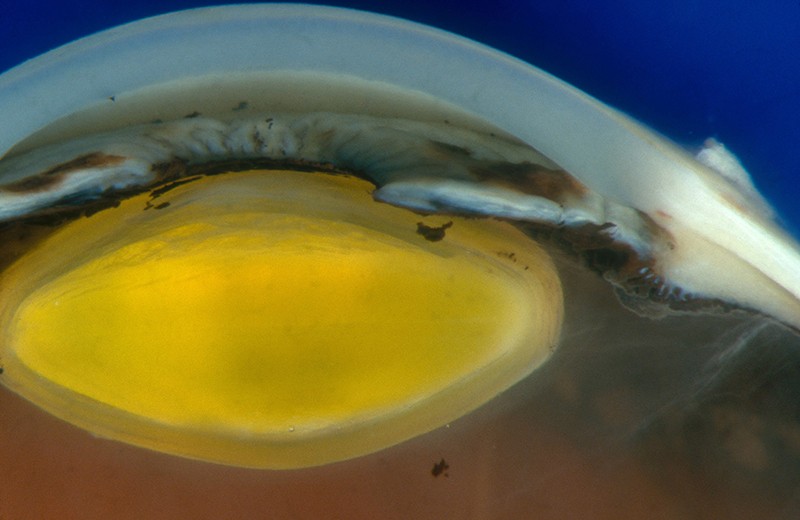
Anterior segment of human eye showing cornea, iris, and lens.
A 40-year-old Japanese woman is the first person in the world to have her cornea repaired using reprogrammed stem cells, according to Nature.
Ophthalmologist Kohji Nishida from Osaka University, Japan, said the woman has a disease in which the stem cells that repair the cornea, a transparent layer that covers and protects the eye, are lost. The condition makes vision blurry and can lead to blindness.
To treat the woman, Nishida says his team created sheets of corneal cells from induced Pluripotent Stem (iPS) cells. 
These are made by reprogramming adult skin cells from a donor into an embryonic-like state from which they can transform into other cell types, such as corneal cells.
Nishida said that the woman’s cornea remained clear and her vision had improved since the transplant a month ago.
Currently, people with damaged or diseased corneas are generally treated using tissue from donors who have died, but there is a long waiting list for such tissue in Japan.
Japan has been ahead of the curve in approving the clinical use of iPS cells, which were discovered by stem-cell biologist Shinya Yamanaka at Kyoto University, who won a Nobel prize for the work. Japanese physicians have also used iPS cells to treat spinal cord injury and Parkinson's disease among others.

Treat women, not just fibroids — Ajayi

… HIFU milestone spearheads wider access to non-invasive care L-R: Founder/Managing Director, Nordica Fertility Centre and Fibroid Care ce...